Infrastructure

Aerosol Remote Sensing
01
EVE

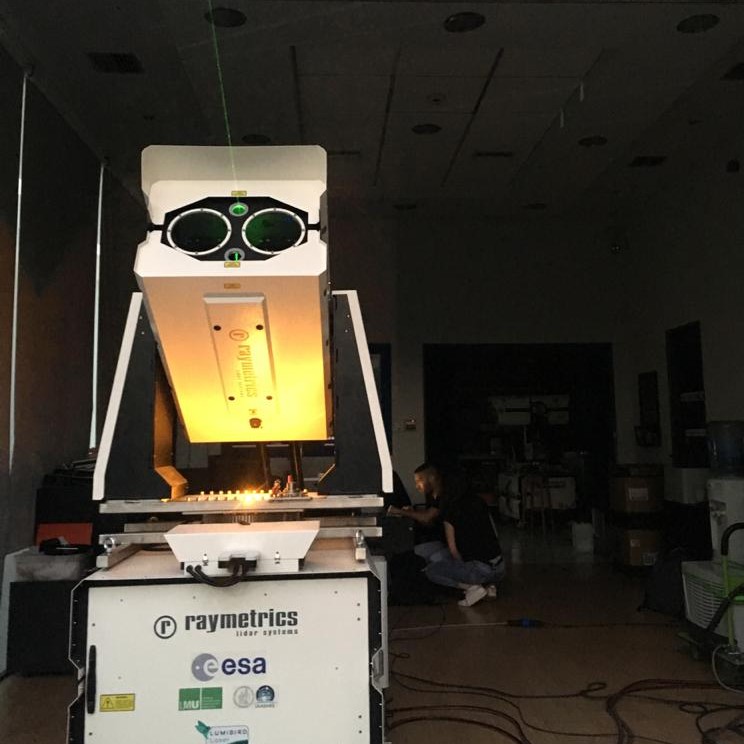
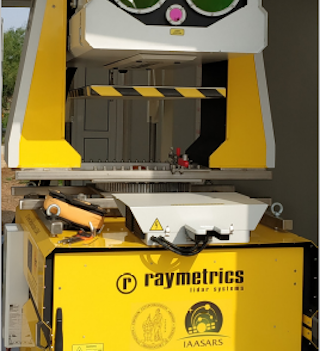
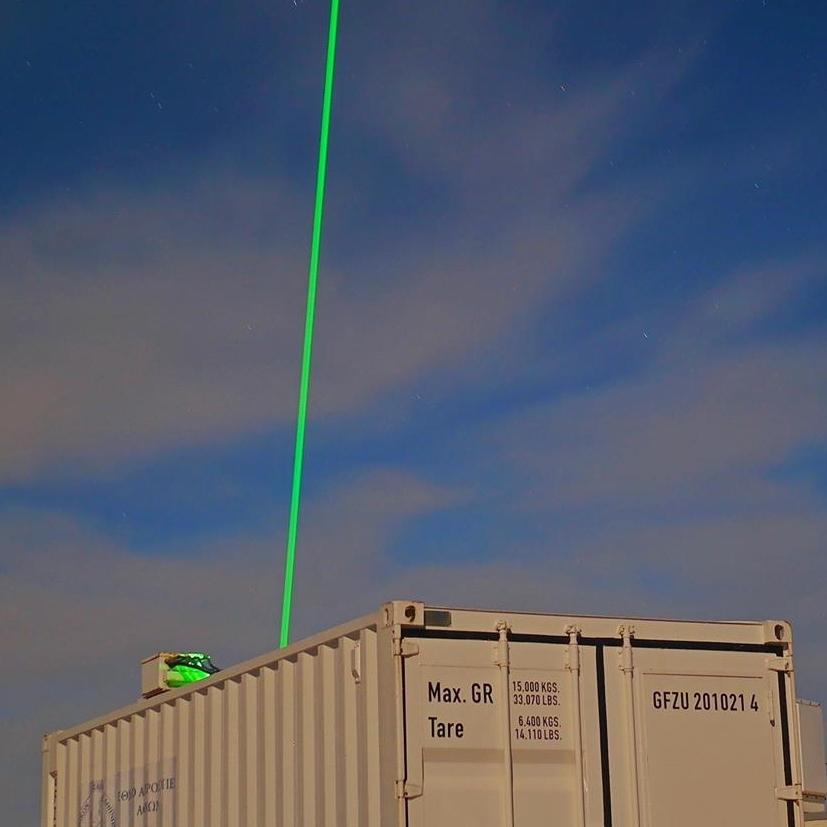
The Enhancement and Validation of ESA products (EVE) is a depolarization lidar system developed for the European Space Agency (ESA) by Raymetrics S.A. in collaboration with National Observatory of Athens (NOA) and Ludwig-Maximilians University of Munich (LMU). It is an innovative, mobile system which consists of a dual-laser/dual-telescope configuration. It enables the simultaneous emission of linearly and circularly polarized radiation at 355 nm and the detection of the elastically backscattered radiation with polarization sensitive channels, as well as the inelastic (Raman) backscattered radiation at 387 nm. EVE aims to provide the ESA-Aeolus mission with a flexible, mobile reference ground-based lidar system capable of providing well-characterized fiducial reference measurements of aerosol optical properties. Morover, it can be upgraded to multi-wavelength system to support calibration/validation activities of the ATLID lidar on-board the upcoming EarthCARE satellite.
02
WALL-E

The ReACT group of IAASARS has developed “WALL-E” lidar, a novel polarization lidar system capable of monitoring possible dust orientation and microphysical properties. WALL-E emits linearly- and elliptically-polarized light and detects the linear and circular polarization of the backscattered light from the dust particles in the atmosphere. It also employs scanning capabilities so as to provide more information on the dust orientation and microphysical properties. The system is designed based on the high quality standards of the European lidar network EARLINET, in the framework of ERC-COG program D-TECT.

03
Polly-XT lidar

Multi-wavelength lidar for the 24/7 monitoring of the atmospheric state. The system enables the determination of the particle backscatter coefficient at 355, 532, and 1064 nm and of the extinction coefficient at 355 and 532 nm, allowing aerosol classification and microphysical characterization to derive the particle size distribution and concentration. In addition, the system operates two polarization-sensitive channels at 355 and 532 nm, to determine the aerosol particle shape from the (particle) linear depolarization ratio, to separate dust and non-dust particles in mixed aerosol layers, and to investigate mixed-phase clouds.

04Direct-sun Solar Polarimeter (SolPol)

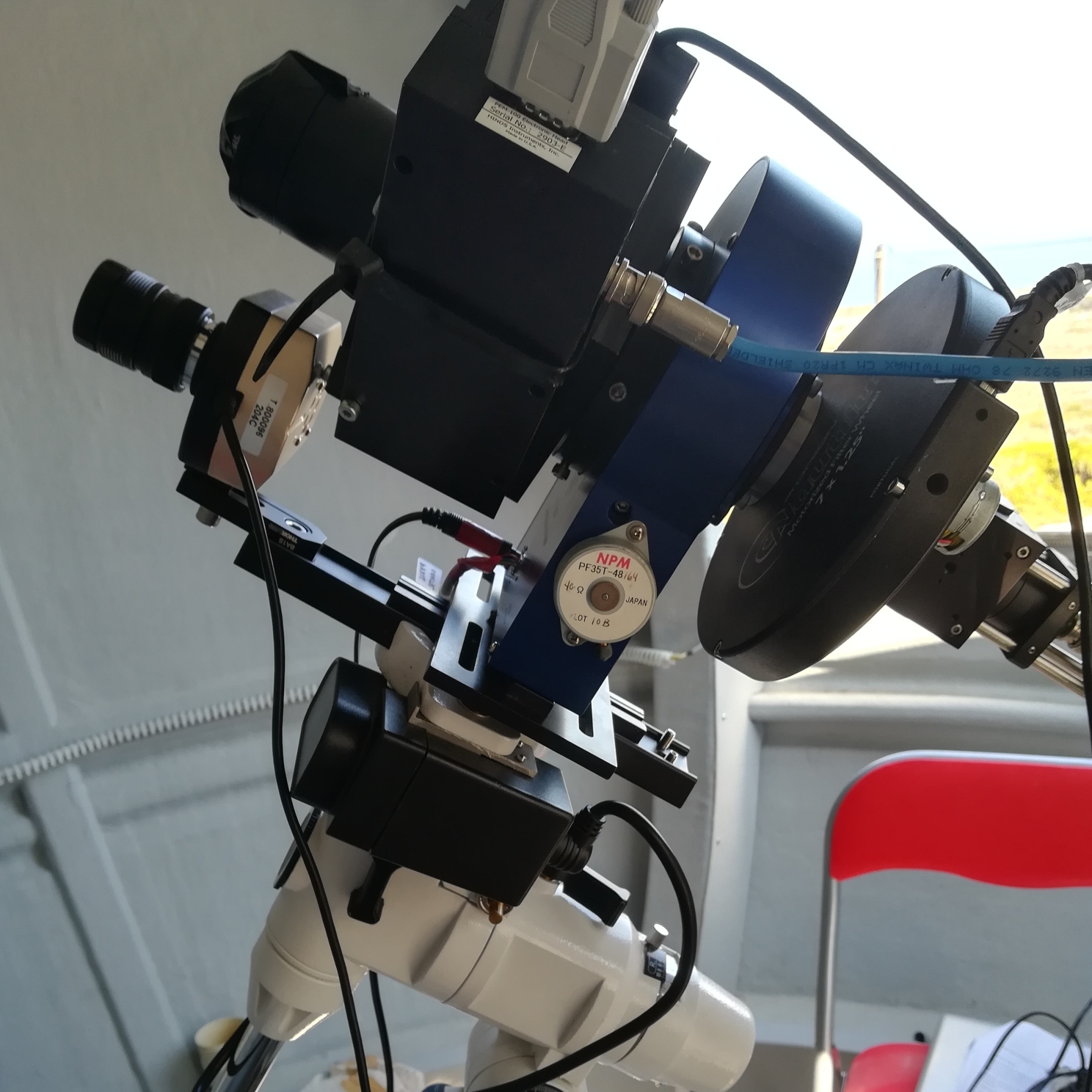
A prototype solar polarimeter, kindly conferred by the University of Hertfordshire, is designed to operate with direct sun tracking capabilities and measures the degree of linearly and/or circularly polarized sunlight due to forward scattering from atmospheric aerosols. Measurements are centered on 550nm, due to light detector current limitations, while the instrument’s precision and accuracy are of order of the 1ppm and 1%, respectively. SolPol is a robust instrument capable of manual operation per demand, especially under heavy Saharan dust loads and with low maintenance requirements. It is hosted within a medium sized astronomical dome for the optimum protection-to-applicability relation.

05CIMEL sunphotometer

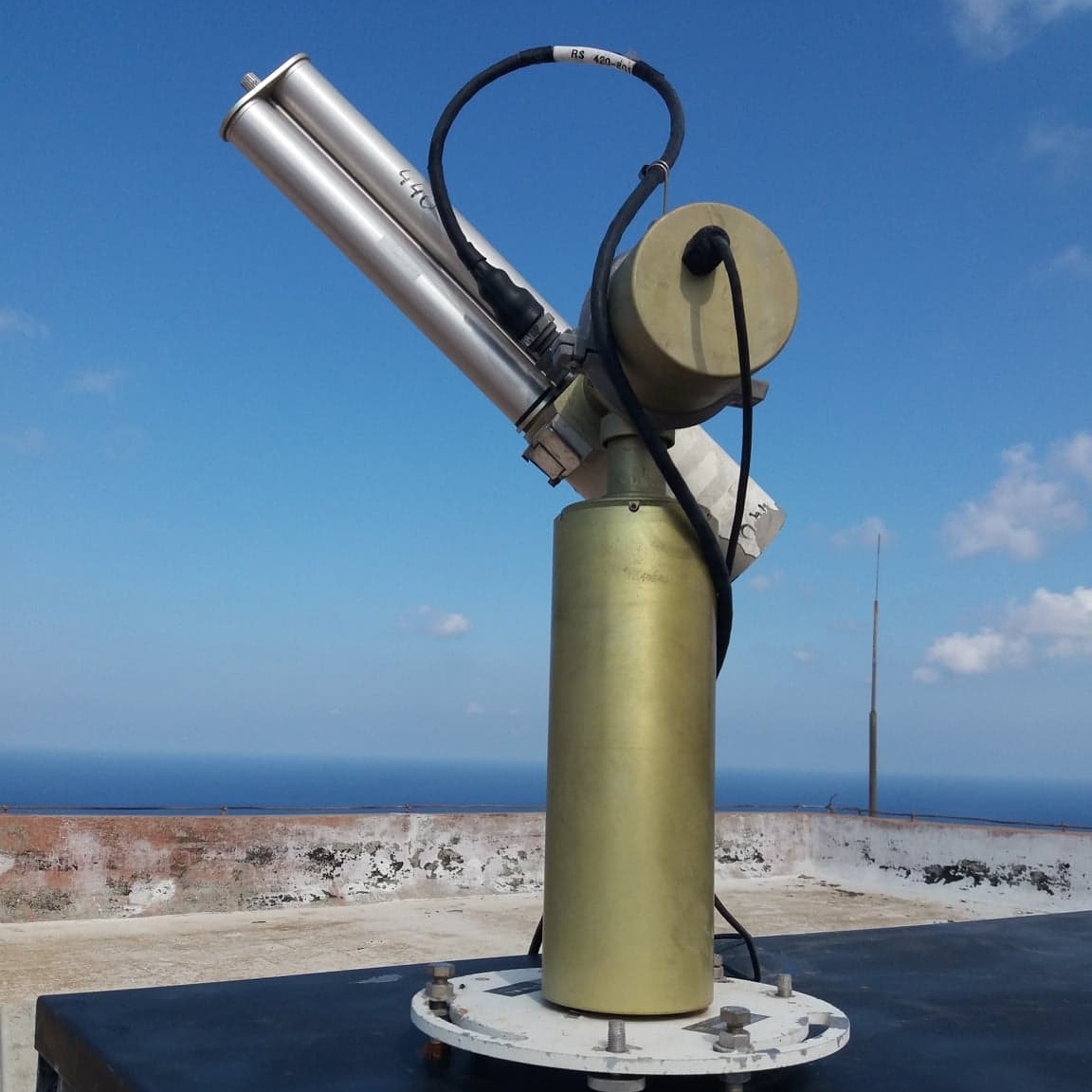
CIMEL is a high-precision multiband, automatic sun-and-sky scanning radiometer that provides measurements of the optical properties of the atmosphere by measuring the sun and sky radiance. Due to its very low power consumption and its self-powered system, it meets the requirements of continuous monitoring in terms of reliability, long term and very low maintenance cost.

06Pandora 2S

The Pandora 2Spectrometer (2S) is a passive remote sensing system that performs direct-sun, moon, and scattered skylight hyperspectral measurements in the UV–VIS spectral range (270–900 nm). The system is mounted on a microprocessor-controlled azimuth and elevation tracker, so that it can point anywhere in the sky. Pandora 2S provides retrievals of the total and tropospheric vertical column densities and concentration profile information of several trace gases, such as NO2, O3, HCHO, SO2, H2O, based on the Differential Optical Absorption Spectroscopy (DOAS). The instrument is part of the expanding Pandonia Global Network (https://www.pandonia-global-network.org/) for the monitoring of trace gas concentrations worldwide.

07SkySpec-2D MAX-DOAS

The SkySpec-2D system developed by Airyx GmbH (https://airyx.de/item/skyspec/) is a passive remote sensing instrument that leverages the Multi-AXis Differential Optical Absorption Spectroscopy (MAX-DOAS) technique for the retrieval of the total and tropospheric vertical columns, vertical distribution, and surface concentrations of various trace gases, such as NO2, HCHO, SO2, O3, HONO, CHOCHO. The instrument can also deliver information on the aerosol optical depth and extinction profile indirectly from O4 slant column retrievals. The system comprises two spectrometers, one operating in the ultraviolet (UV) and one in the visible (VIS) spectral region, and performs spectrally resolved measurements in the wavelength range from 300 nm to 550 nm approximately. The telescope of the system is motorized in both viewing elevation and azimuthal axis, providing full hemisphere coverage and enabling both direct-sun and scattered sky radiance observations.

Scroll